Keeping events fair without losing people
Designing the whole penalty system for people who book a place and then don’t turn up: the rules, the screens they see, the tools the team uses, and the part that runs on its own.
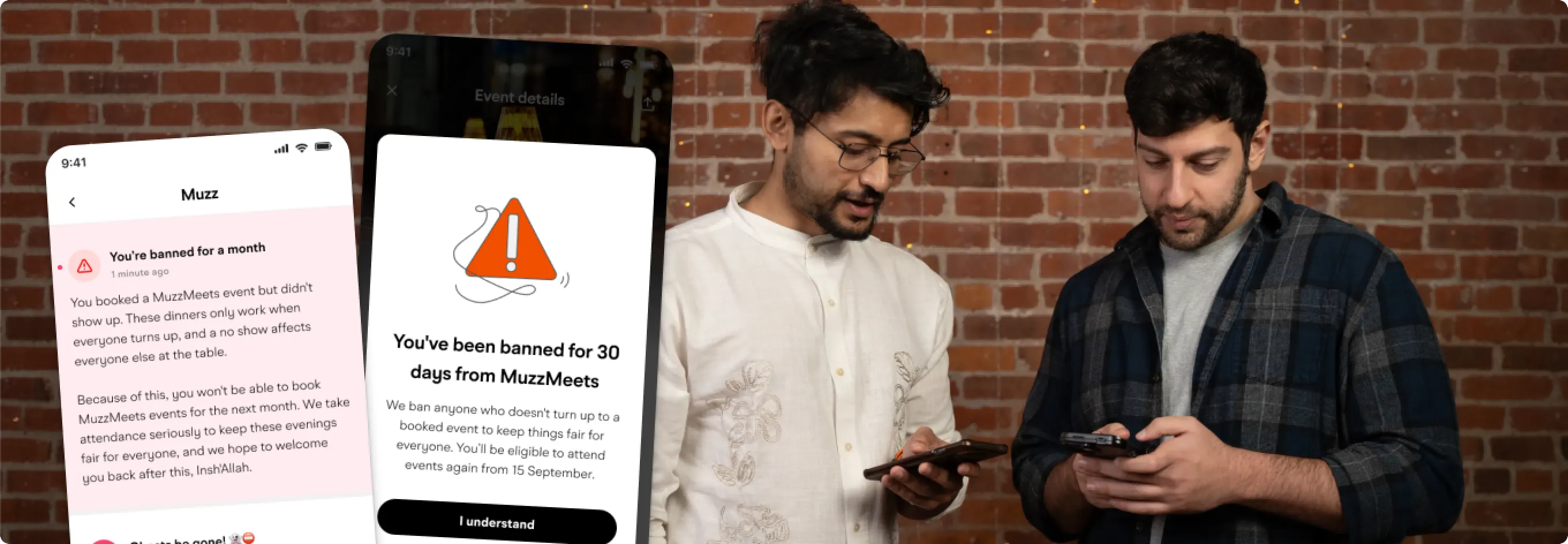
context
MuzzMeets is an invite-only event. Members are seated at a table of eight, grouped by age and gender.
That tight seating is what makes the evening work, and it is also what makes a no-show expensive. One empty seat leaves the table unbalanced and a worse night for everyone who did turn up.
The aim was to work with everyone involved to design the whole banning system: what counts as something worth a penalty, what the user sees, what admins can do about it, and how it runs without anyone watching.
the problem
Nothing happened when someone did not turn up. We had no rule for what deserved a penalty, no way to tell a user they had been given one, and no tool for the support team to step in when we got it wrong.
defining the penalty
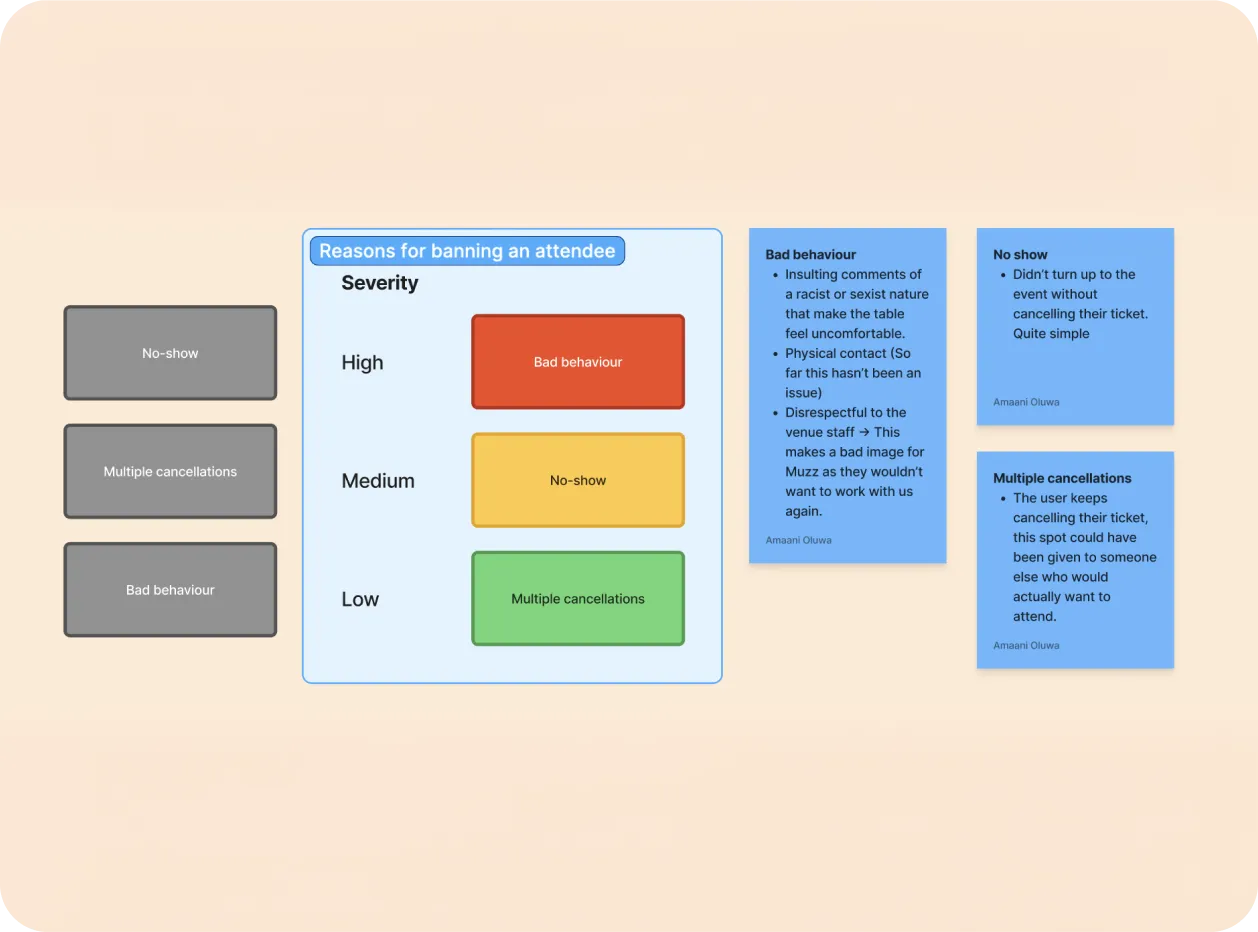
Before designing anything, I worked out who we were penalising, and what for.
There were three kinds of user to think about: people who did not turn up, people who behaved badly, and people who cancelled repeatedly. I mapped out potential penalties for each.
After reviewing the concept with the stakeholders we agreed to drop the repeat cancellations and built the MVP around no-shows only. It is the behaviour that costs the most and the one we can be most certain about.
key decisions
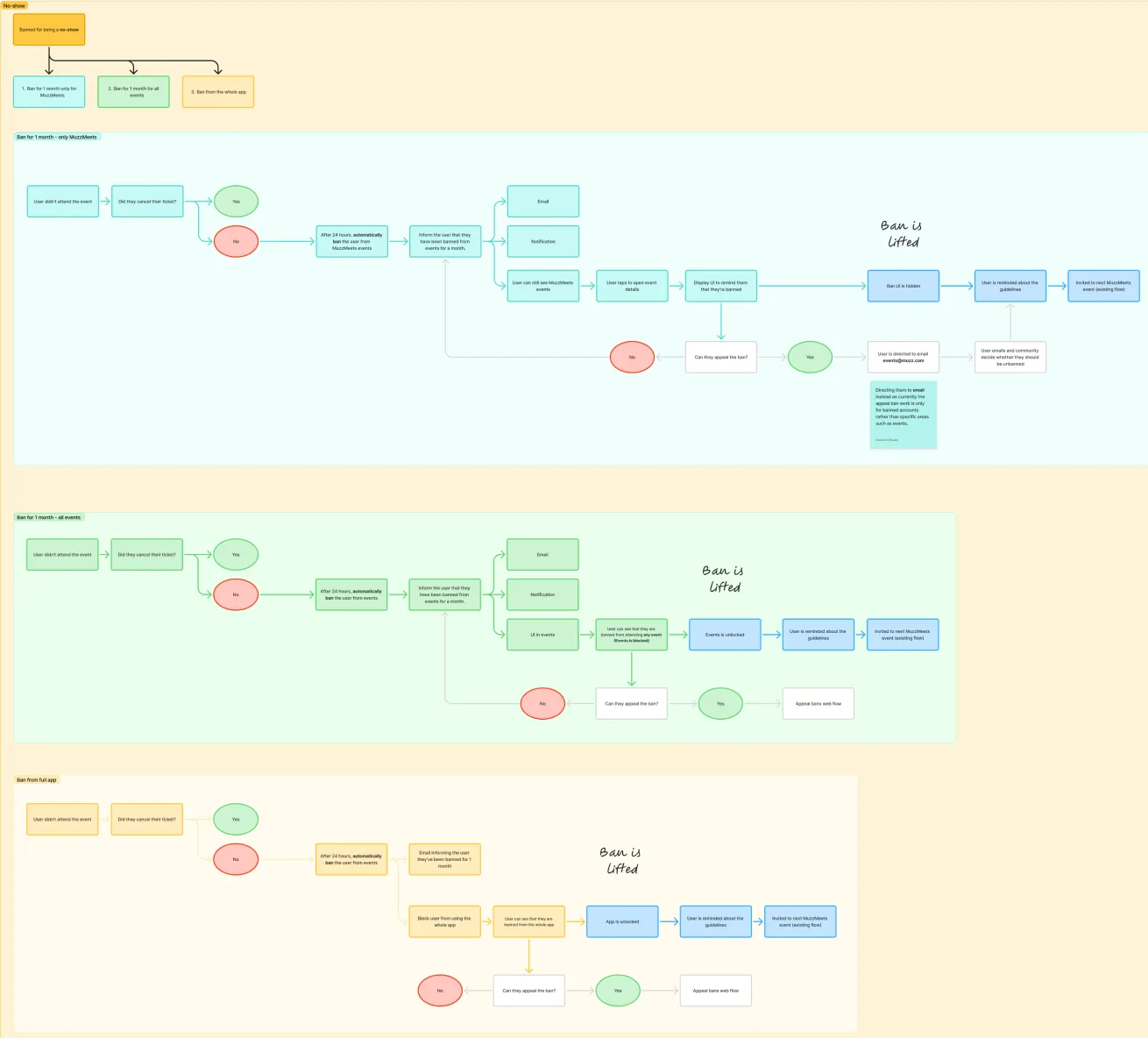
Where the ban appears. I wanted to warn people inside the app before they got that far. That was overruled: the ban only shows when someone tries to book, which kept the build small.
What to call it. I initially suggested ’paused’, however we went with ‘banned’ instead, to come across more blunt and direct.
How to show the duration of the ban. A date they can book again, rather than a countdown. Easier to read, and easier to build.
What we left out. Repeat cancellers, a proper appeals process, and bans that get longer each time were all kept out of the MVP.
the tension
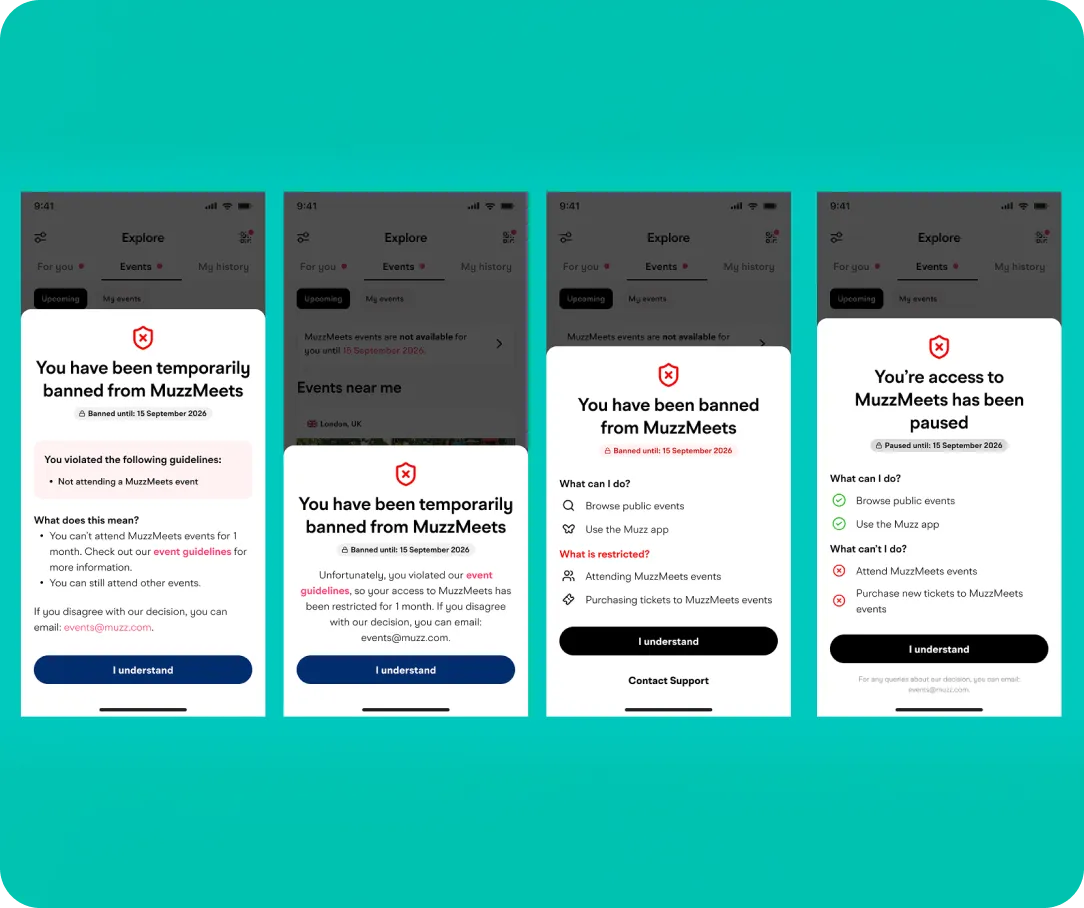
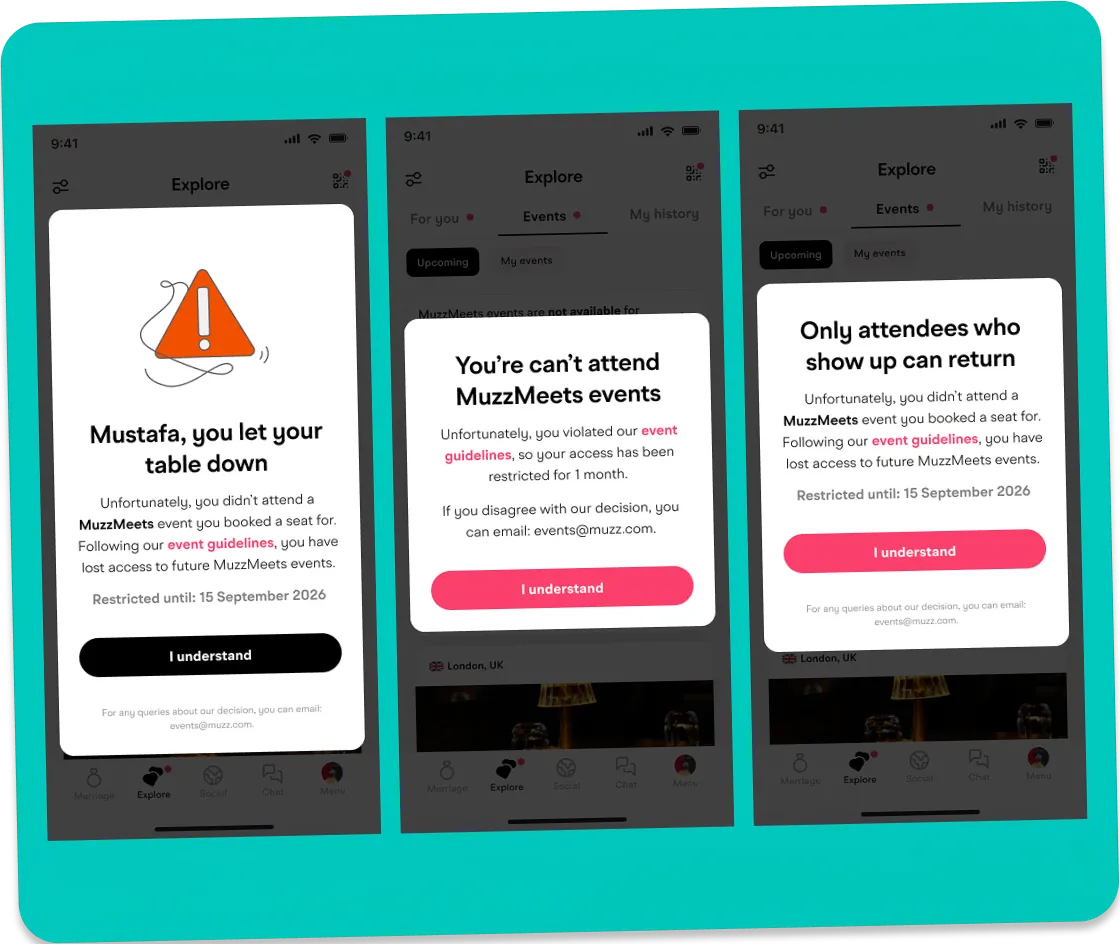
Leadership asked for copy that was clear, direct and harsh. But writing that only told people off would have pushed them away. I solved it in the words themselves: completely clear about what happens, and kind about the person it happens to. So that despite them being temporarily banned, they have a reason to return.
the copy
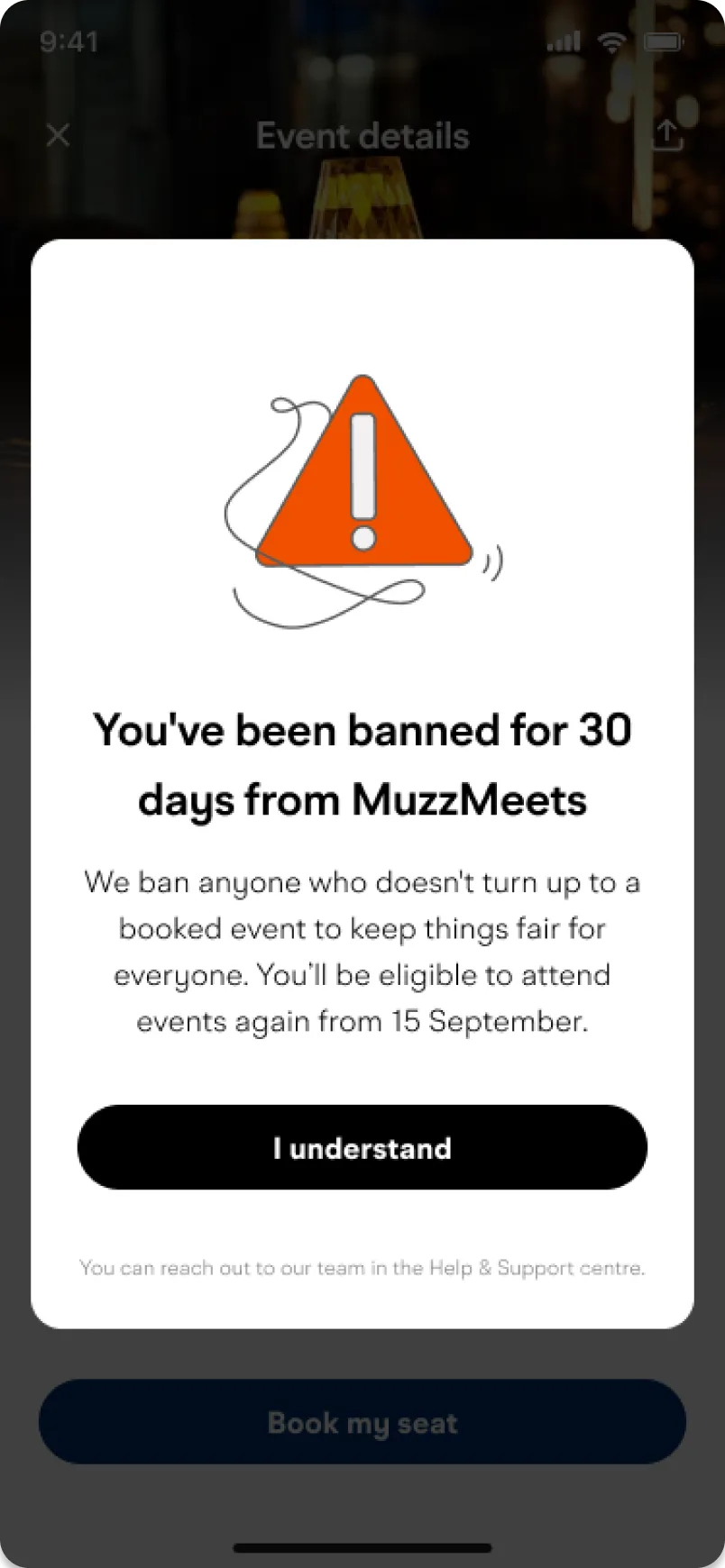
You’ve been banned for 30 days from MuzzMeets. We ban anyone who doesn’t turn up to a booked event to keep things fair for everyone. You’ll be eligible to attend events again from [date].
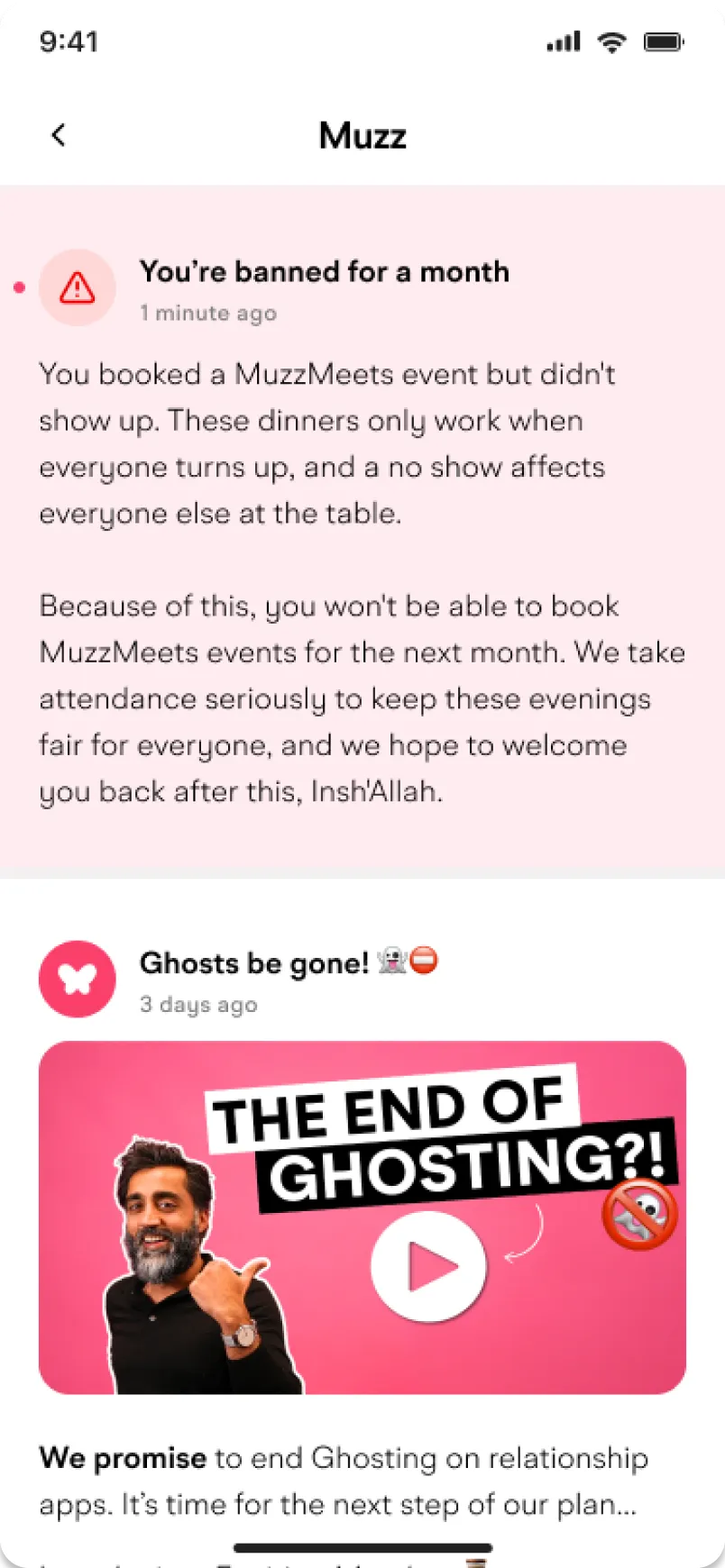
You booked a MuzzMeets event but didn’t show up. A no-show affects everyone else at the table. We take attendance seriously to keep these evenings fair for everyone, and we hope to welcome you back after this, InshAllah.
the system
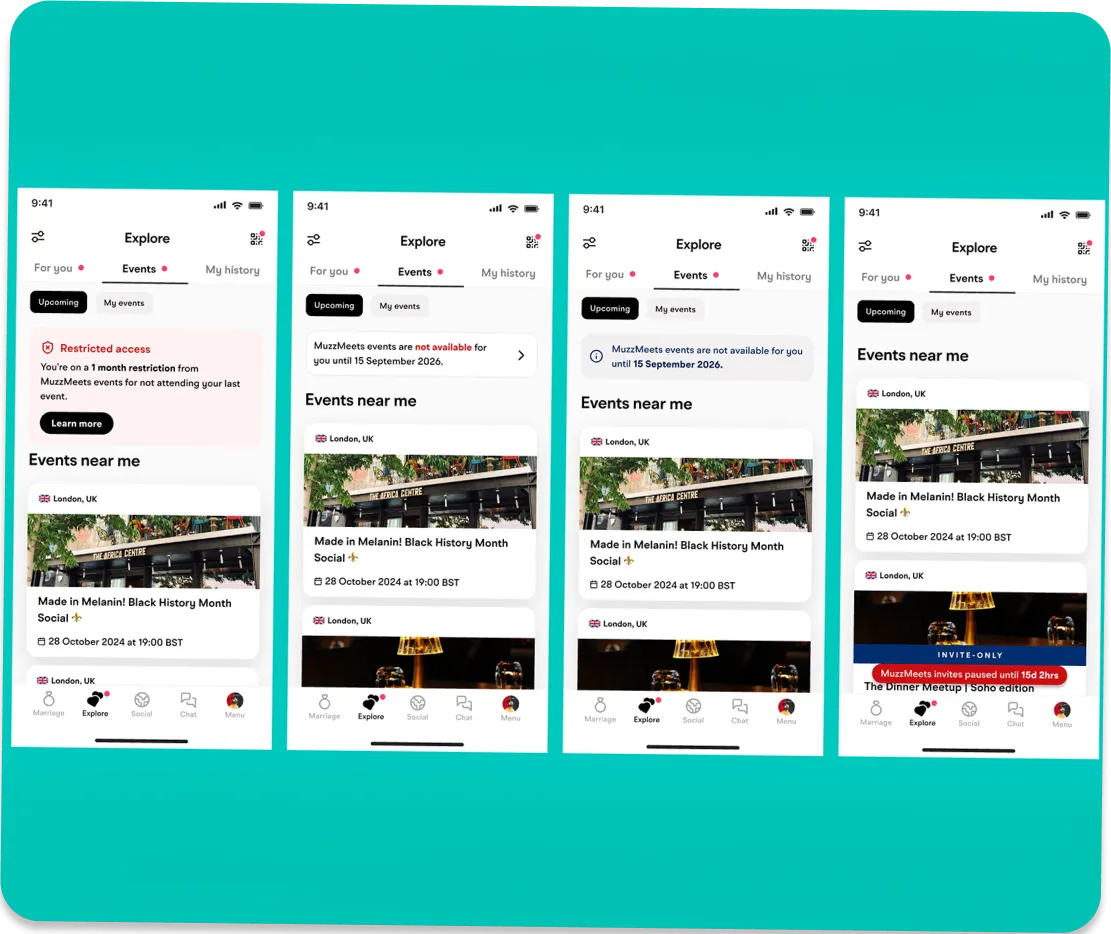
Once it is running, nobody has to do anything. The app spots the no-show, applies a 30-day ban, blocks the next booking, and gives admins a way to undo it.
The rules we settled on: every ban is 30 days, with no increase for repeat offenders in the MVP. It follows the account, so a second profile will not get round it. It starts 12 hours after the event, in case someone checks in late. And we keep an eye on the cases where somebody was checked in manually.
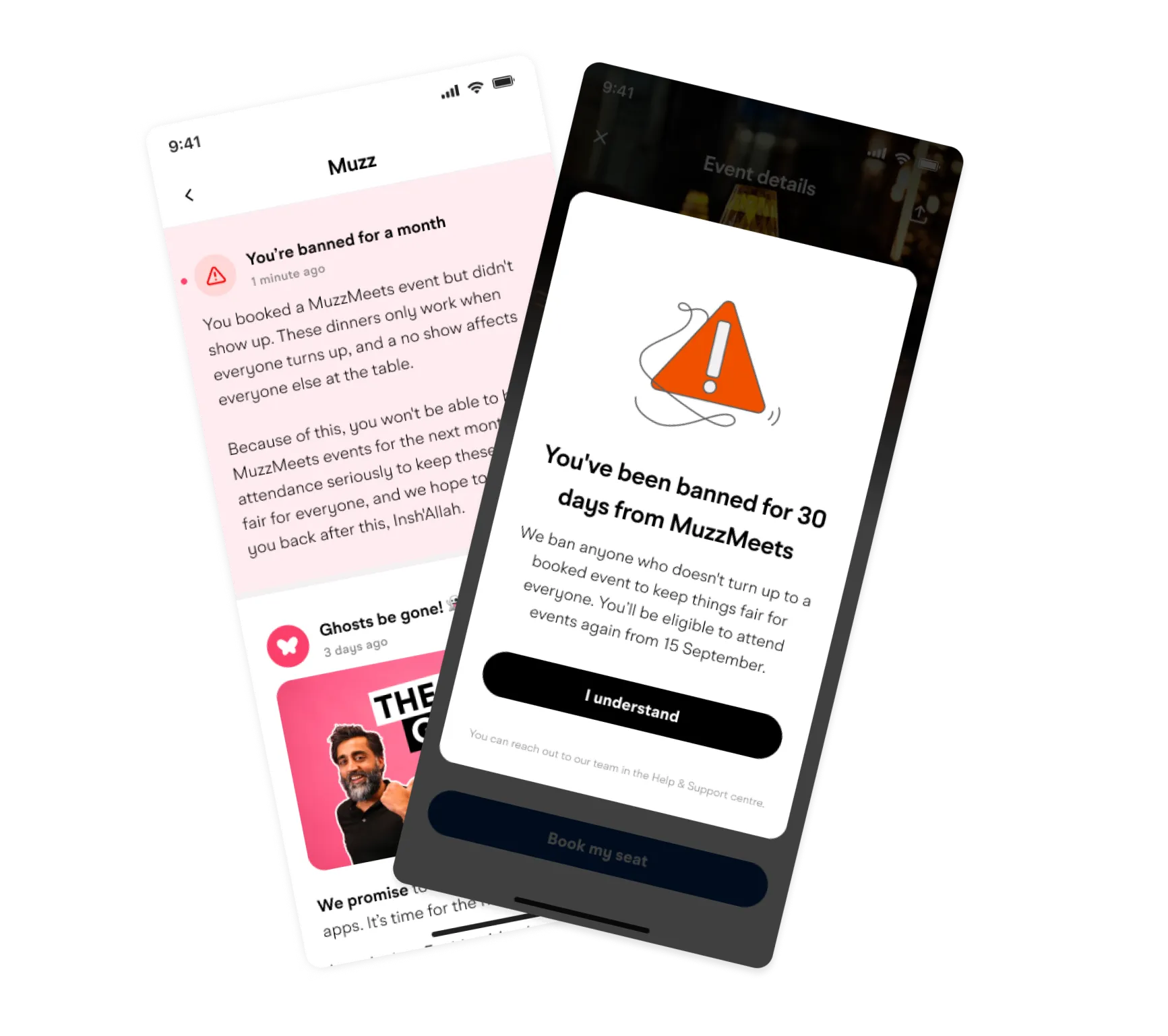
the banned dialog
The ban shows up at the moment it matters: when someone taps ‘Book my seat’. A dialog appears and tells them they are banned, roughly why, and the date they can book again.
The reason is kept vague on purpose. A dialog is a bad place to argue, so anyone who wants to challenge it is sent to support.
the notification
The notification says what the dialog cannot. It is the longer, kinder version: what happened, why it matters to the other people at the table, and that they are welcome back.
the bad-behaviour path
Bad behaviour has to be reported by someone; the app cannot spot it on its own. Rather than build something new, I used the reporting flow we already had and cut two screens from the start of it. Reporting someone from a MuzzMeets event is now quicker than it was before this project.
admin tooling
Community managers can lift a ban in Wali, and have to give a reason every time. Those reasons are how we will find out whether the rule is too harsh.
lessons & reflections
The easy version of this project is a simple ban dialog. The work that mattered was everywhere else: deciding the rules, deciding what to leave out, getting four teams to agree, saving engineering time by reusing and deleting instead of adding, finding words that were firm and kind at the same time, and making sure we would be able to tell whether it worked.
The things we put off; longer bans for people who do it again, and a proper way to appeal, are what I would look at first, once there is data to decide with.
what to measure
I designed the MVP so that we could tell whether it works.
No-shows before and after: the number that matters most.
How many come back after their 30 days: did the kinder wording keep them?
How often admins lift a ban, and why: is the rule too harsh?
Checked in by the app or by hand: is the loophole being used?
How many people contact support about a ban: was sending them there the right call?
How many people finish the reporting flow: did cutting two screens help?
How many people get banned twice: is a longer second ban worth building?