Making intimate events discoverable and easy to book
Designing how users discover a new invite-only event format and book their place, from first impression through to confirmation.
context
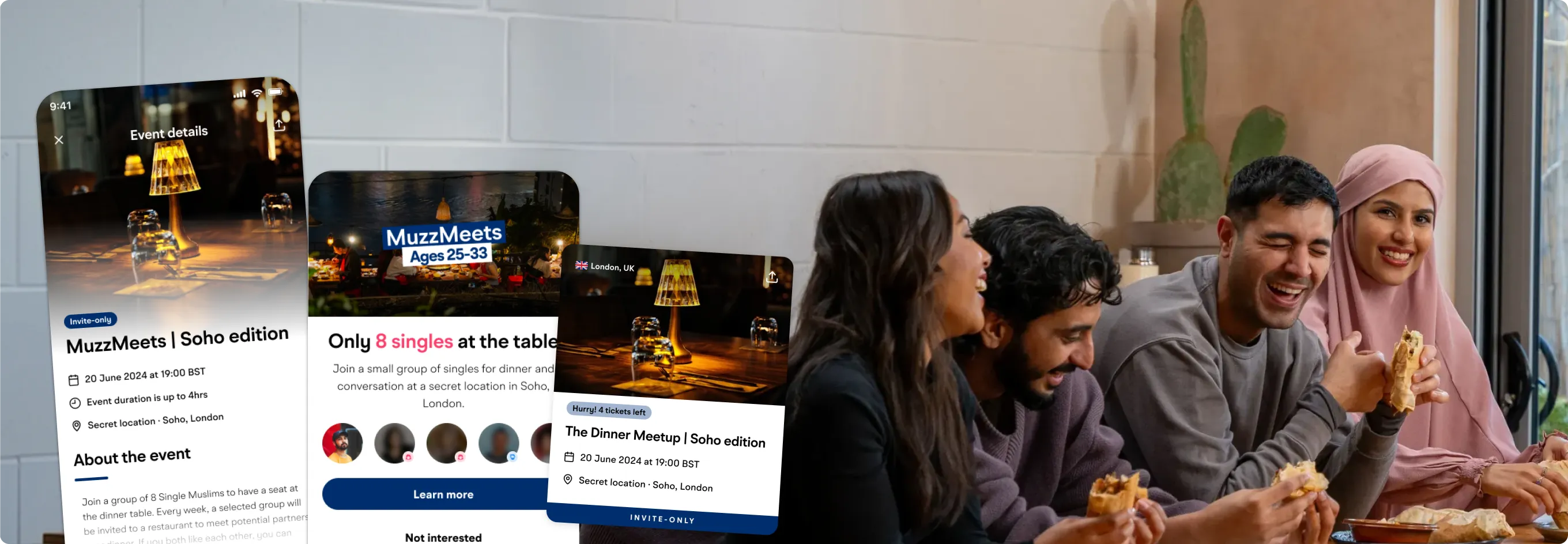
MuzzMeets is a new invite-only event format designed to bring Muzz members together in small, intimate groups. Guests are invited to book a place at an event, with their table, venue and fellow attendees revealed closer to the date.
As the designer responsible for the MuzzMeets experience, I worked across the end-to-end product experience, including event discovery, booking, validation and post-purchase journeys.
For this case study, I focused on how users discover MuzzMeets and book their place.
the problem
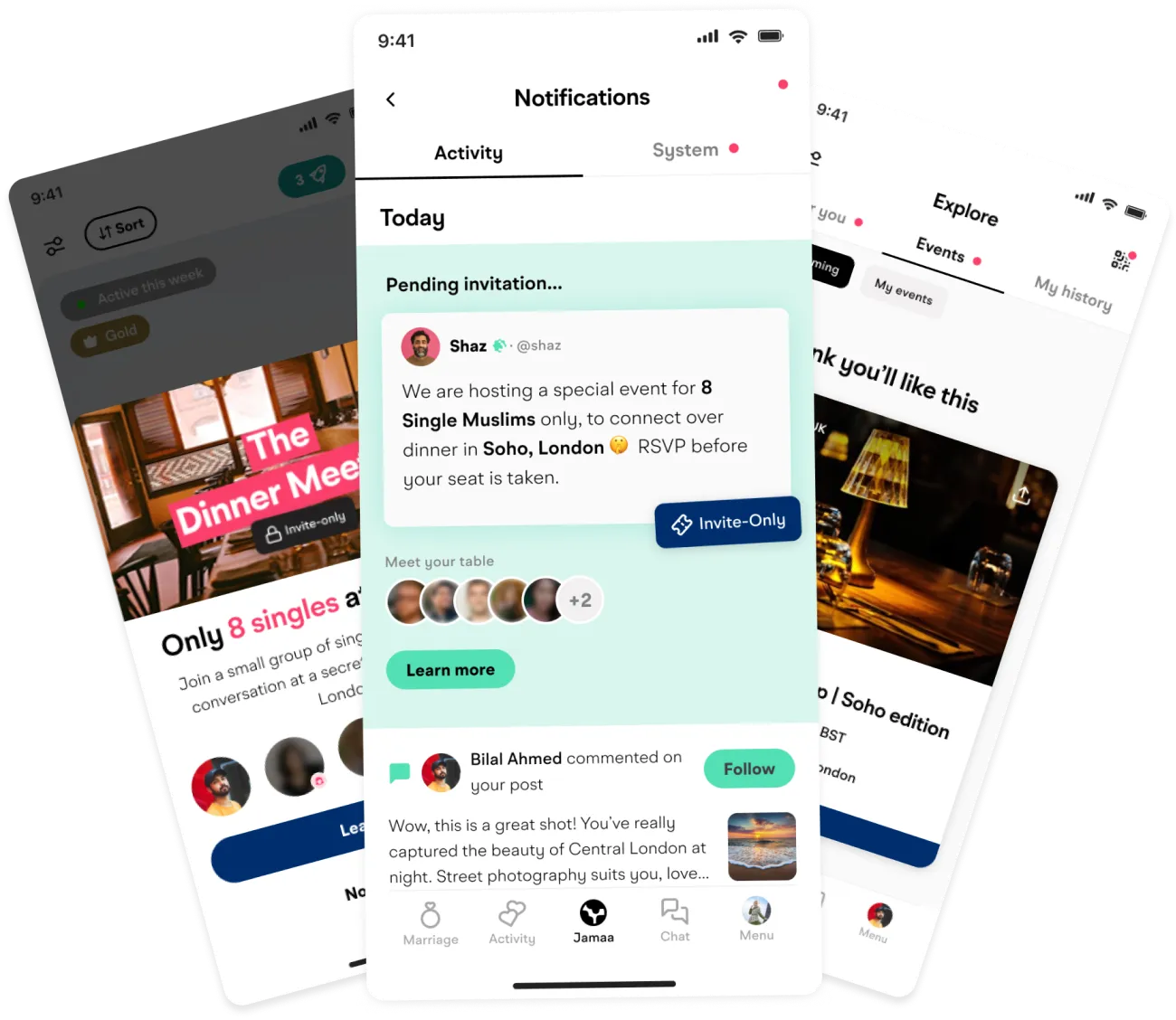
Muzz already had ways to promote existing IRL events, but there was no dedicated experience for helping users discover and book MuzzMeets.
This created two problems: users needed a clear way to find out about the upcoming event, while the team needed a scalable purchase flow that could handle eligibility, availability and payments without relying on manual intervention. Without solving both sides of the experience, we would struggle to grow MuzzMeets beyond its initial events.
what I wanted to learn
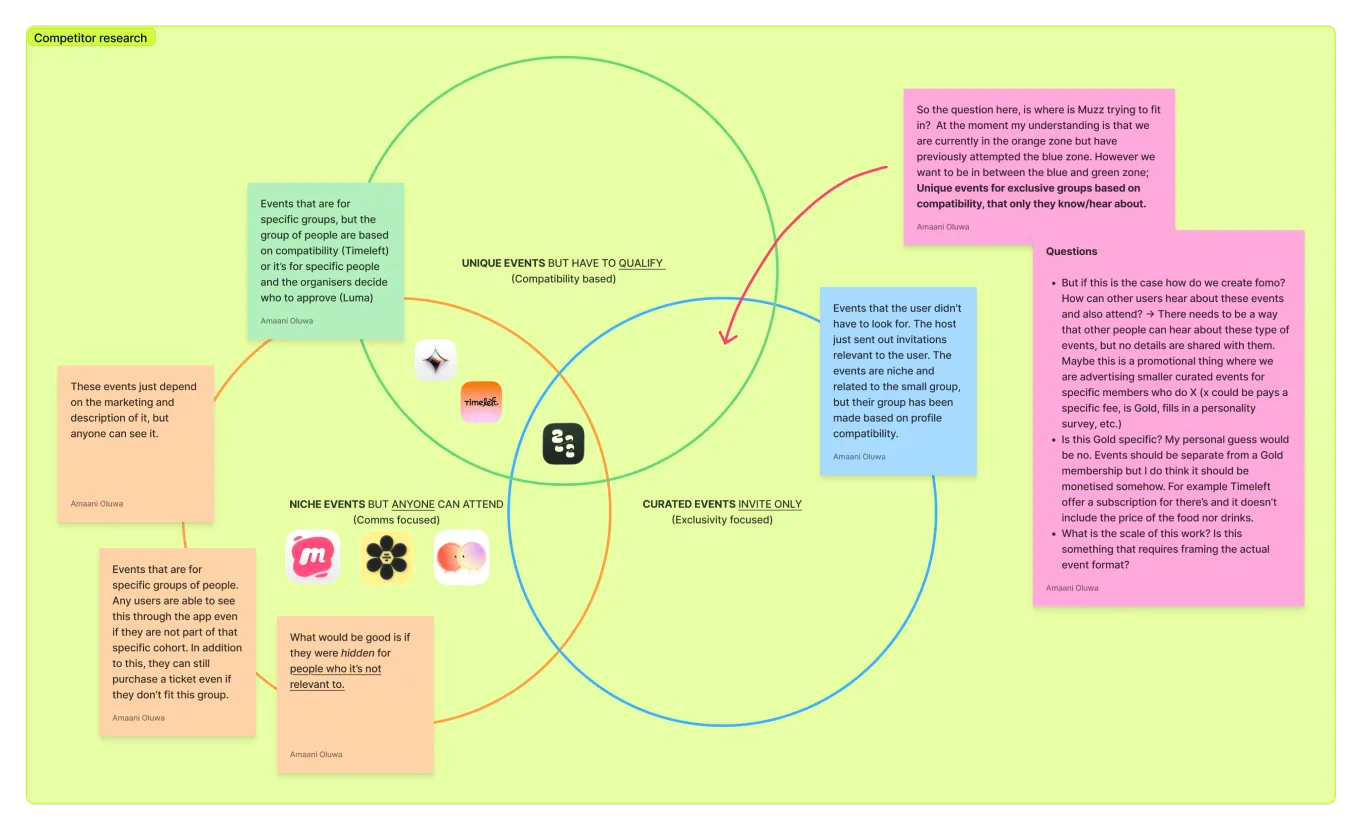
Before designing the experience, I wanted to understand how users currently discovered IRL events and what might influence their decision to attend.
I looked at the impact existing in-app promotion had on IRL event sales, click-through rates from current entry points, whether users were more likely to purchase through the For You tab in Explore or Jamaa.
I also looked at Timeleft and Breeze to understand how other products handled small-group social events and repeat attendance.
key considerations
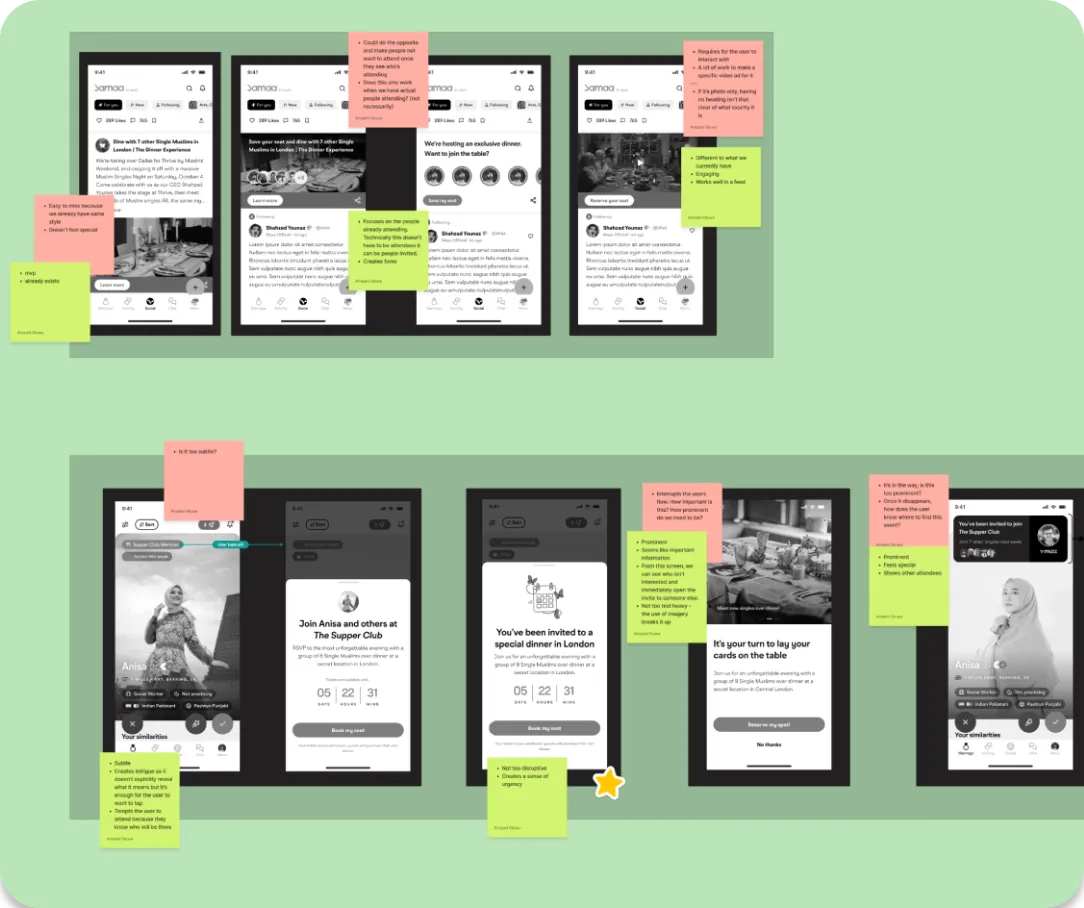
Discovery can’t rely on a single entry point. Because this was a new format, discovery needed to feel native to the rest of Muzz while giving MuzzMeets enough visibility to establish itself.
Booking needed to feel simple, not daunting. With a limited number of places, booking felt higher stakes than a typical event ticket, so the flow had to build confidence without overwhelming users with details revealed later.
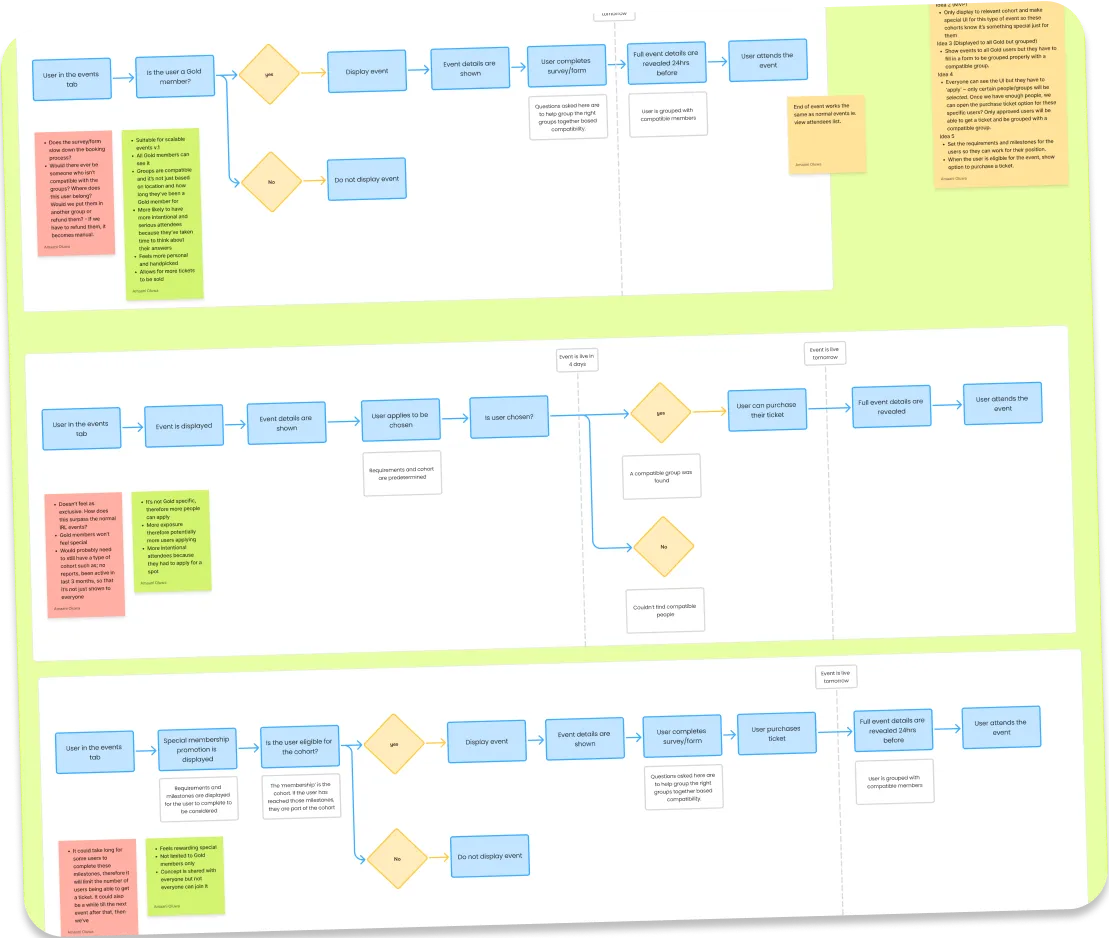
Validation needed to happen before purchase. We needed to prevent users reaching payment only to discover they weren’t eligible, particularly around location, age and previous attendance.
The MVP needed room to learn. For V1 I focused on the minimum experience needed to make the model viable: discover an event, validate eligibility, book a place and receive confirmation.
the challenge
The experience also needed to work within the constraints of an MVP. MuzzMeets was an entirely new event format, so we needed enough structure to make booking feel trustworthy and straightforward, without over-engineering it before we knew how users would respond.
the opportunity
The opportunity was to build a repeatable system that could support MuzzMeets as it expanded into more events and locations. This meant creating:
Discoverability: multiple entry points within Muzz to surface relevant events to eligible users.
A simple booking experience: a clear, organised flow that took users from discovery through to payment without unnecessary friction.
Smart validation: eligibility checks built into the purchase journey, rather than relying on manual checks.
Scalable allocation: a system that could allocate available spaces to eligible users, or clearly communicate when an event was unavailable.
the task
Create a way to promote scalable events to users in London, and make booking feel organised, simple and trustworthy.
The experience needed to answer three questions for users:
Can I attend? Make eligibility clear before users commit to booking.
Is there a place for me? Communicate availability clearly and prevent users booking unavailable events.
What happens after I book? Set expectations around what users would learn immediately and what would be revealed later.
the solution
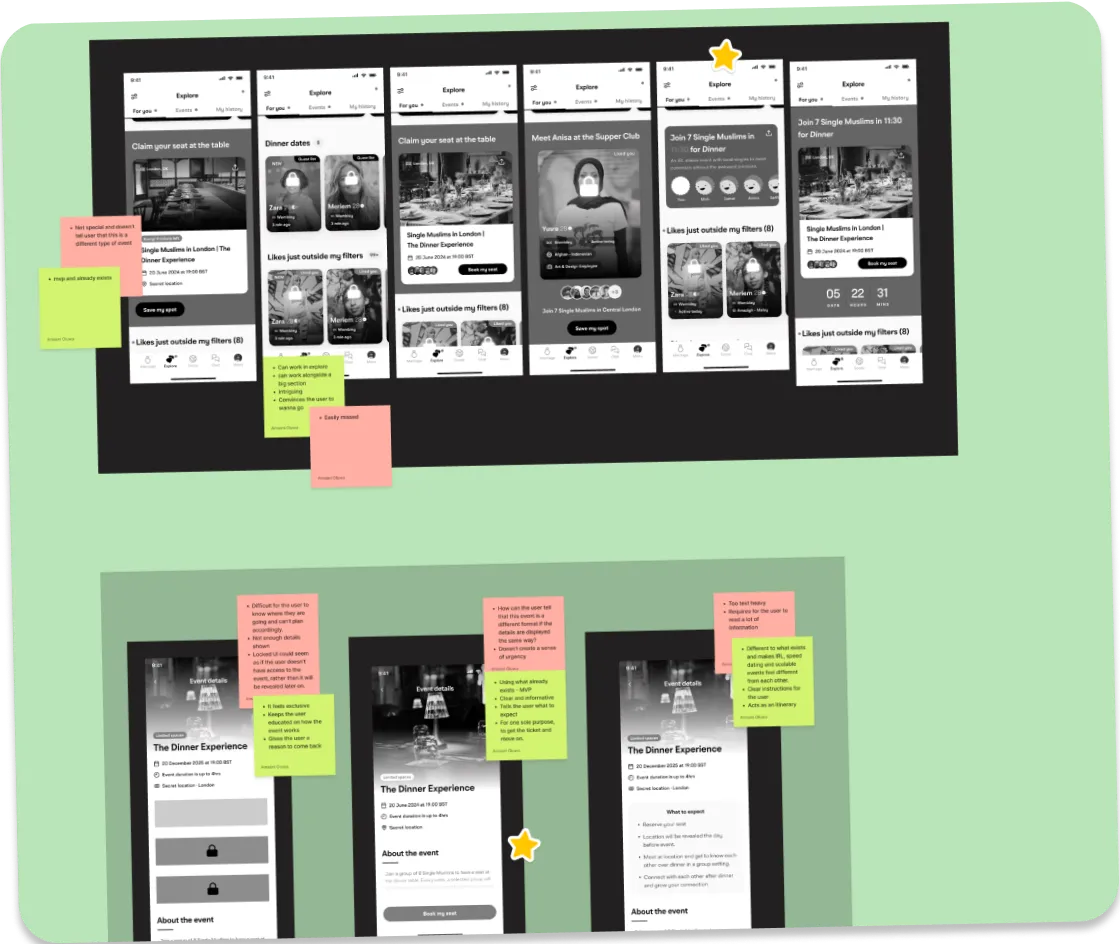
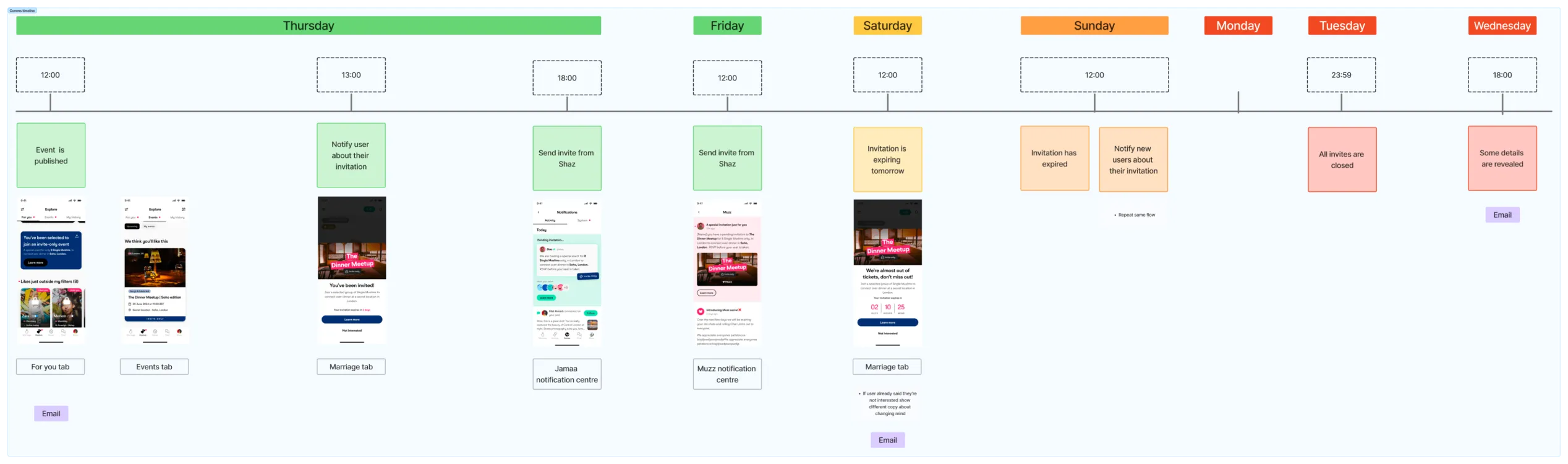
Rather than relying on a single destination, I designed multiple entry points for MuzzMeets across the app. This let us promote events where users were already discovering content, while creating a consistent experience regardless of where they entered from. These areas were in the events tab, for you tab, marriage tab and the notifications centre.
a guided booking flow
I designed the purchase experience to introduce information progressively rather than presenting everything upfront. Users could move from event discovery → event details → eligibility → availability → payment → confirmation.
This made the process feel more intentional and reduced the cognitive load of booking an unfamiliar type of event.
smart validation before payment
Rather than treating every user as eligible to purchase, validation was built into the booking flow, covering location, age bracket, previous attendance, event availability and user eligibility.
This allowed us to prevent unsuitable bookings before payment and reduce the need for manual intervention. Where an event was unavailable or a user wasn’t eligible, the experience could communicate that clearly, rather than leaving users wondering what had happened to their booking.
designing for what users don't know yet
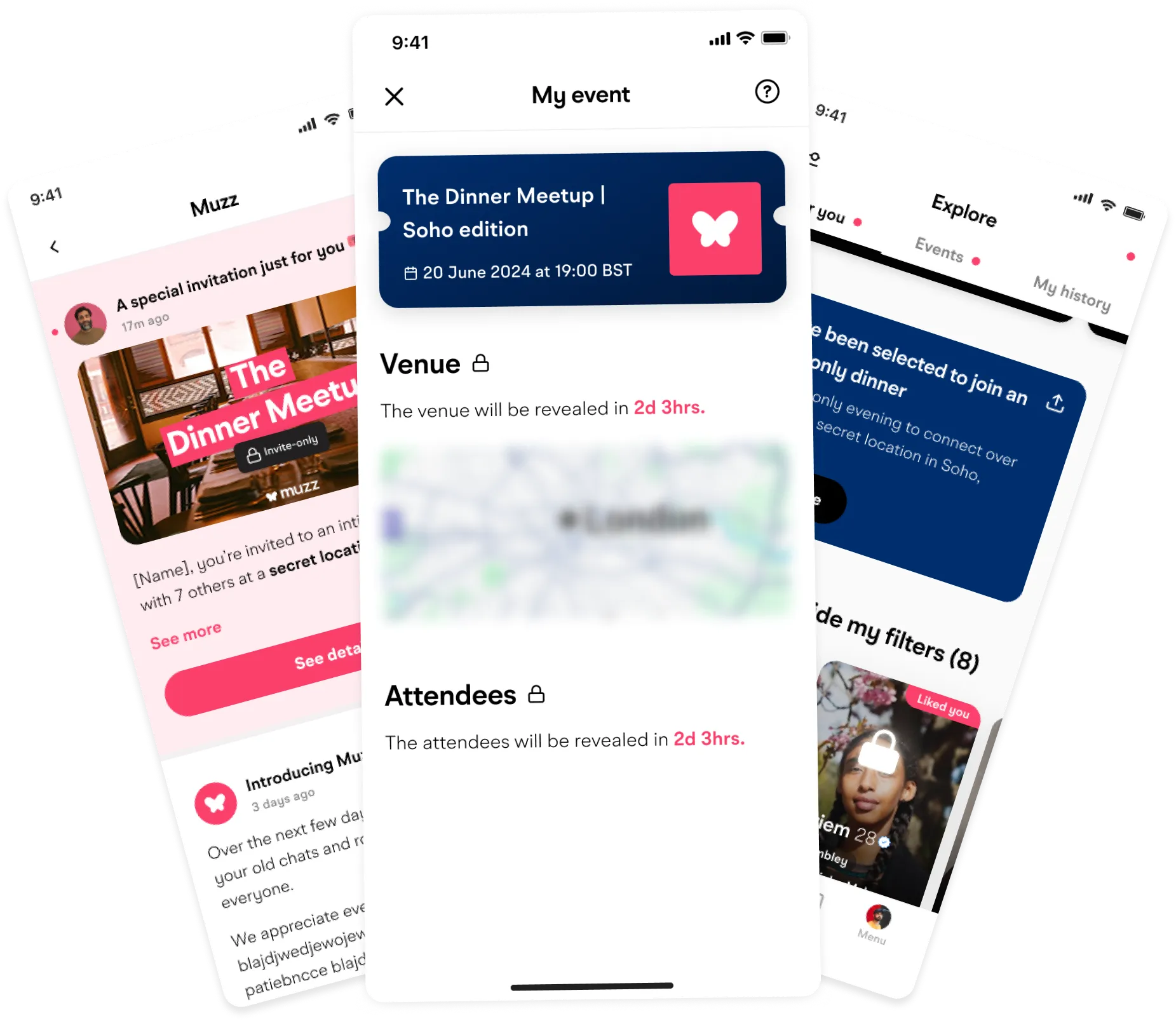
One of the more interesting challenges was that users weren’t given all the information at the point of purchase. They would know about the event, but their specific table, venue and fellow attendees would be revealed later.
Rather than treating this as missing information, the experience needed to make the staged reveal feel intentional, giving users enough to confidently commit, while setting clear expectations about what would come next.
designing for scale
Although V1 launched with a small number of events, I designed the experience around the longer-term model. The same framework could support multiple events, different locations and dates, different eligibility criteria, limited availability, and users being allocated to different tables.
We weren’t designing a one-off event booking experience. We were establishing the foundations for a repeatable MuzzMeets model.
measuring success
I defined success around both the commercial performance of MuzzMeets and the quality of the experience.
Acquisition & conversion: registrations, bookings and attendees, revenue per city, booking conversion.
Event quality: match rate from events, post-event feedback, no-show rate.
Long-term engagement: repeat attendance, repeat booking rate.
These would be measured monthly to understand whether MuzzMeets could scale beyond its initial events.
the outcome
The resulting experience established the foundations for how users could discover, validate and purchase MuzzMeets events within the app. By combining multiple discovery entry points with a structured booking flow and pre-purchase validation, we created an experience that could support the initial MVP while giving the team a foundation to scale the format.
The project also highlighted an important product principle for MuzzMeets: the experience needed to make users feel comfortable committing to an event, even when some of the most important details would only be revealed later.
what I learned
Designing for a new product model is different from optimising an existing one. With an established feature there is usually existing behaviour and data to design around. MuzzMeets had neither, so I had to think beyond the immediate UI and consider how the whole system would work once there were multiple events, locations, dates and eligibility rules.
MVP doesn’t mean designing for the smallest possible experience. The goal wasn’t to remove features, but to identify the minimum system that could support the business model safely and effectively.
Trust matters most when information is intentionally withheld. Asking someone to pay for an event before revealing their venue or table creates a different trust relationship from a traditional booking, so the experience had to be transparent about what users were getting now and what would come later.