Knowing who's actually turning up
The end-to-end check-in experience for MuzzMeets, from buying a ticket through to sitting down at the table.
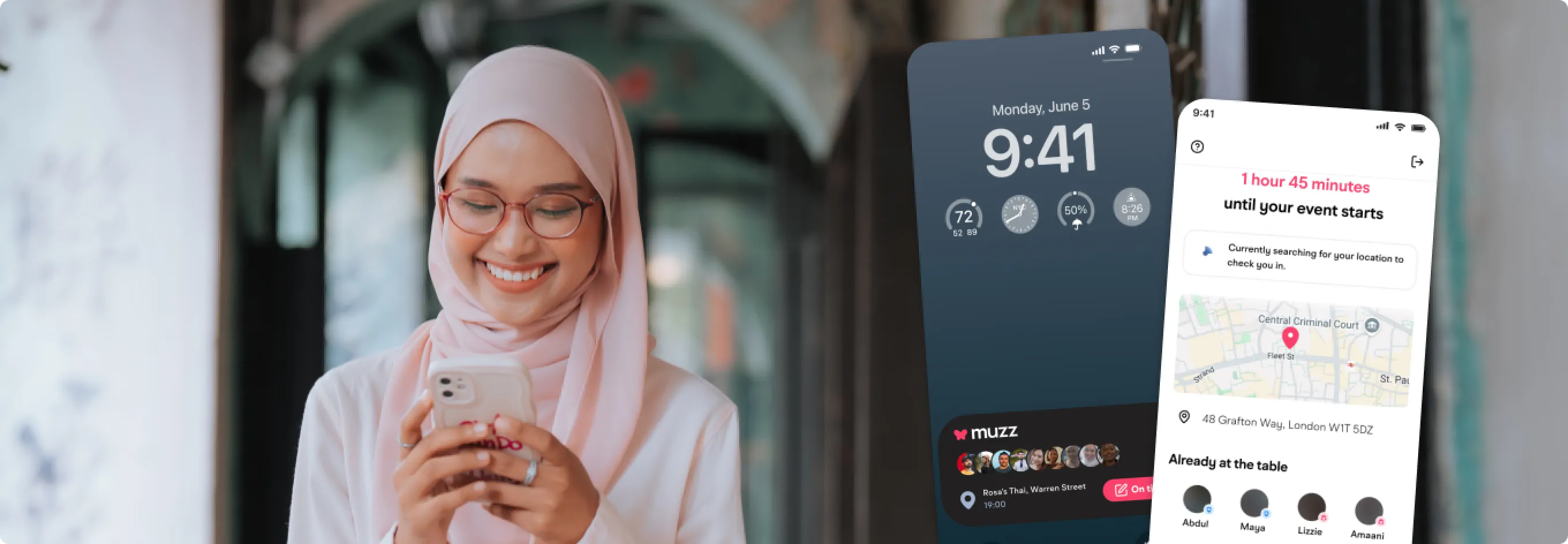
Automated
Successful automated check-ins
Reduced bans
Less ‘no-shows’
Earlier cancellations
Cancellations were made earlier on
context
MuzzMeets seats members at a table for the evening. Before any of that works, somebody has to know who is actually coming.
At the time, that answer came from chasing: emails, messages, and asking the venue on the night. Restaurants book tables for a specific headcount, so a no-show is not only an empty chair, it is a partnership problem.
I defined and designed the end-to-end check-in experience: what happens after a ticket is bought, how someone confirms they are coming, how they check in at the venue, and what the app does once the evening is over.
the problem
There was no way for a member to say they were coming, running late, or no longer coming. The team found out on the night.
It also had to do this without putting pressure on the attendee. A check-in system that feels like surveillance is worse than none, because people simply stop booking.
what I explored
I looked at every way an event could confirm attendance, and ruled most of them out on logistics rather than design.
QR codes at the venue were the cheapest technically and the most expensive operationally, because marketing would have to supply and maintain physical materials across every restaurant we use.
Live notifications were the opposite: already used for another feature, interactive without opening the app, and dependent on iOS 17 or above. Our own data put 1.3% of users below iOS 15, so the exclusion risk was small enough to accept.
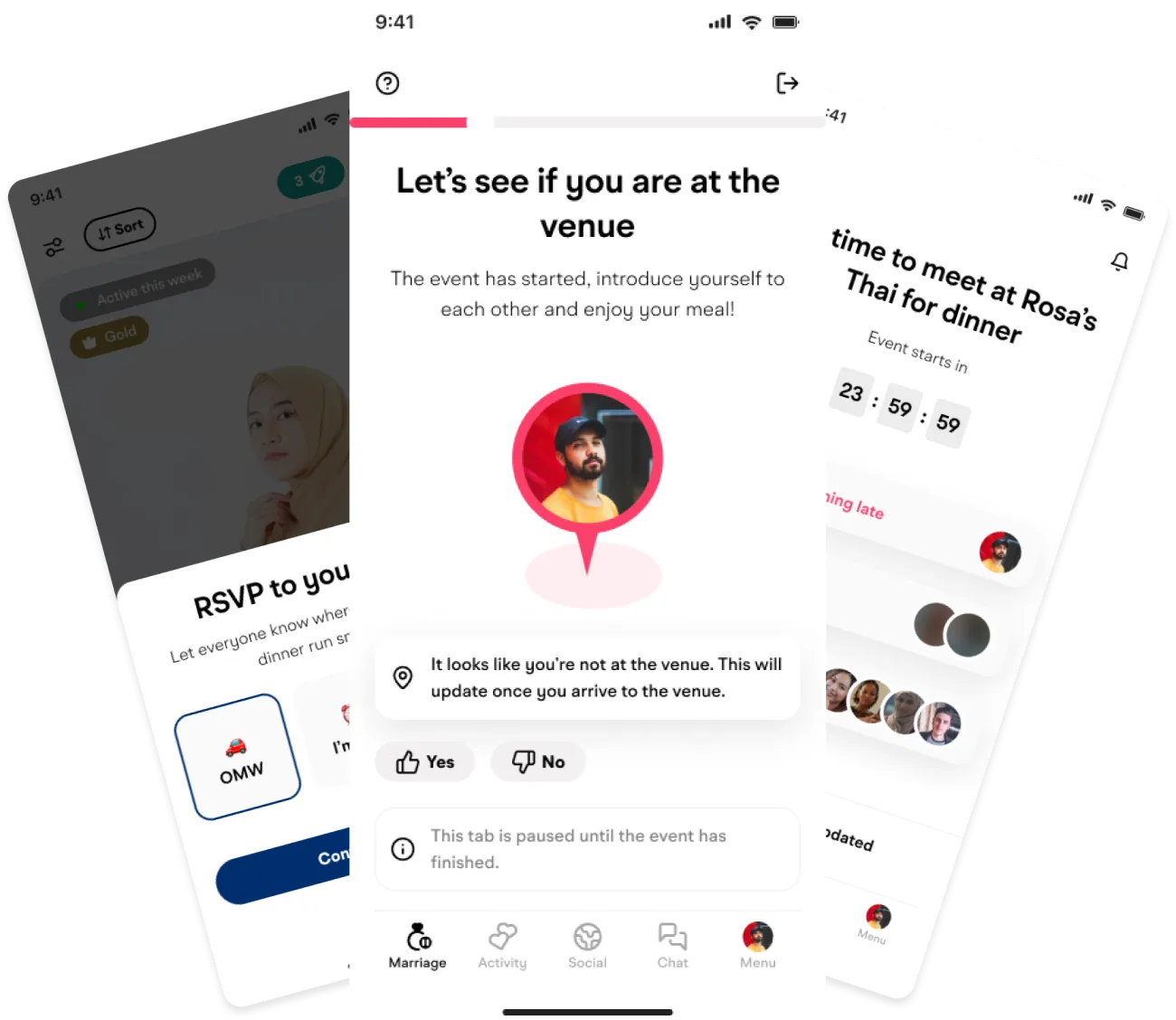
What we landed on was a notification that opens into an in-app view, reads location, and offers the right action for wherever you actually are.
key decisions
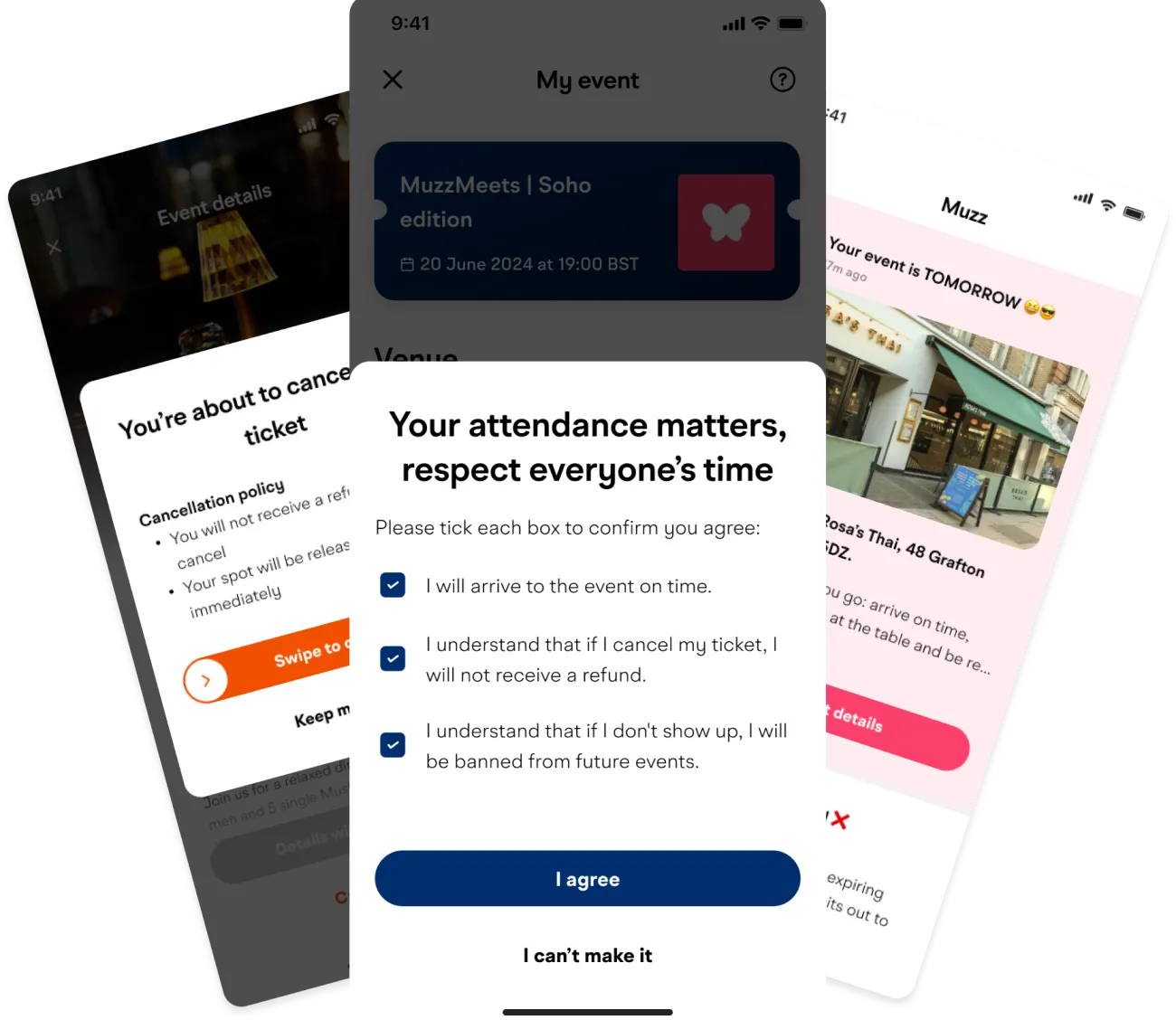
Confirm twice, not once. Once the night before, when details are revealed, and again two hours before the event.
Make the first one blocking. Event details, including the venue, are revealed only once attendance is confirmed.
Two hours, not one. An hour gives no lead time for travel across London.
Ask for location at booking, not at the door. Requesting permission while someone is standing outside a restaurant is the worst possible moment to ask.
‘Confirm your attendance’, not ‘RSVP’. RSVP reads as an invitation you may decline. This is something you have to do.
the flow
At purchase. The terms are stated plainly, location permission is requested, and the details button stays disabled until there are details to show.
24 hours before. Tables are assigned and a notification requires confirmation before the venue is revealed. Attendees appear as avatars and names only; full profiles stay locked.
Two hours before. The Marriage tab becomes a full-screen event view and the Discover tab is blocked. Location tracking starts, and the member can mark themselves on time or running late.
At the venue. Location detection checks the member in, or the manual fallback does. The screen then simplifies to who is at the table, who is on the way, and who is running late.
problem statement
How might we know who is coming, and when, without making a night out feel like a compliance exercise?
status that looks after itself
Most members will never touch their status, so the flow assumes attendance rather than absence and corrects itself.
On time flips to running late once the start time passes without a check-in, with five minutes of grace, and the member can override it if the detection was simply wrong.
Cancellations stay on the list marked as not going, rather than disappearing. Removing them makes a full table look sparse and leaves everyone else guessing.
No-shows are marked but not announced. The team sees it; the table does not.